AI writing needs evidence boundaries more than better prose
Preserve provenance, mark uncertainty, and review facts before polishing style.
The dangerous moment in generated writing is often not awkward prose. It is prose that is too smooth.
When evidence is incomplete, a model tends to fill transitions, rationalize causal links, and turn approximate information into a definite conclusion. Readers see fluency while reviewers struggle to identify where the text crossed its evidence boundary.
Constrain knowledge first
A task should name its knowledge space and references. Workspace-wide retrieval can pull old projects, different clients, or stale facts into current content.
Separate three kinds of statements
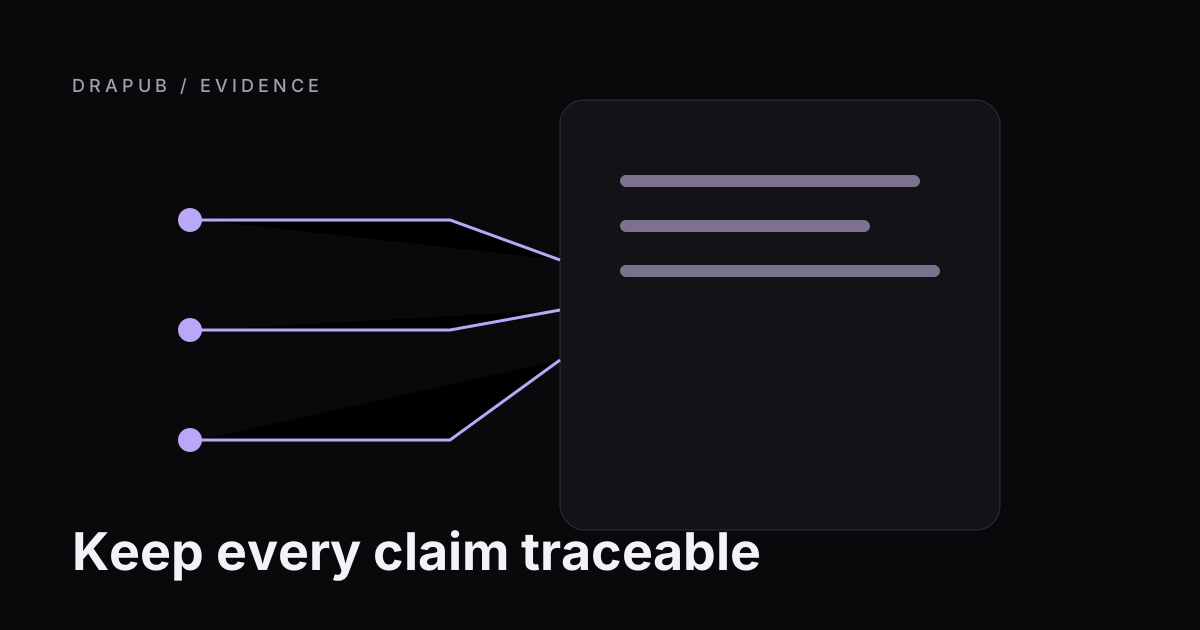
Facts directly supported by a source can carry a citation and preserve meaning.
Judgments synthesized from sources should be labeled as analysis, not the source's conclusion.
Unverified information should remain a question or uncertainty instead of becoming a confident sentence.
Review order shapes quality
Check numbers, dates, people, organizations, quotations, and causal claims before title, rhythm, and voice. Otherwise polished language lowers a reviewer's resistance to a factual mistake.
A citation is not a free pass. Context may be truncated, data may apply to one period or sample, and an article may contain qualifications absent from its summary. Traceability makes review possible; confirmation still belongs to a person.