A bookmark collection is not a content system
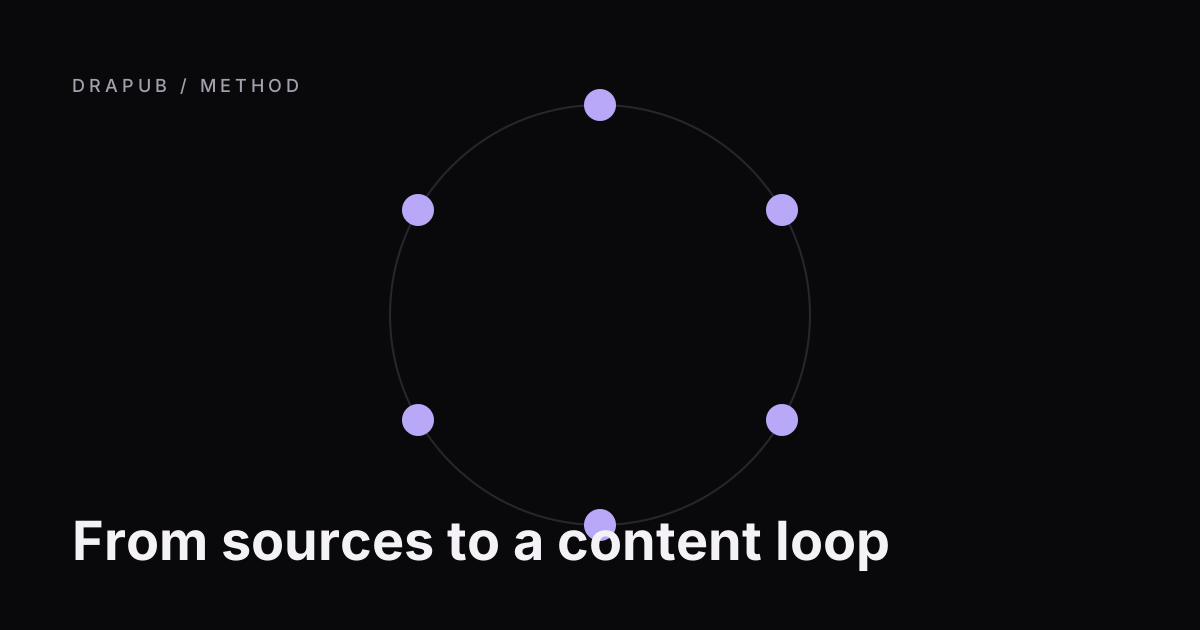
Break ‘I have sources but cannot ship’ into six manageable stages: capture, memory, creation, review, publishing, and learning.
Most serious creators do not lack material. They lack a reliable path from material to publication.
Bookmarks, note apps, and read-later queues solve “do not lose this,” but not what comes next. Which sources deserve a topic? What evidence supports the claim? Who confirms generated copy? How does a publication improve the next draft?
Turn one vague problem into six states
A content system needs at least six stages: capture, memory, topic and creation, review, publishing, and learning. Each needs an explicit input, completion condition, and failure state.
Successful capture does not mean usable knowledge. A page parser may collect navigation, a file may fail, and manual text may lack provenance. A complete draft is not ready to publish until critical claims, destination, and media are checked. A successful API response does not prove readers can see the content.
A master draft matters more than “one post everywhere”
Typical cross-posting mechanically compresses a long article into multiple lengths. Platform constraints invade the primary content, and versions eventually disagree on facts.
Keep a channel-neutral master with the complete argument, stable facts, reusable sections, and citations. Derive WeChat, Xiaohongshu, newsletter, or video scripts from it. Expression can change; the fact snapshot should not.
Publishing remains part of the system
Record where content went, its delivery state, final URL, and why an editor accepted or rejected an edit. Performance can inform review, but correlation should not become an automatic causal writing rule.
A closed loop is not more autopublishing. It means the next draft finds evidence faster, repeats less work, and can always explain how it became the current version.